



Phone:
+86-18513327189

One changed shot can quietly turn into a production-wide problem. A revised creature may require new animation in several scenes, a lighting adjustment can affect compositing work that is already underway, and a redesigned environment may force artists to revisit shots that appeared finished. In a complex visual effects production, the real challenge is rarely completing a single impressive frame—it is keeping every connected shot moving in the same creative and technical direction.
As the number of shots grows, visual effects teams need more than a production schedule. They need a way to understand which shots depend on the same assets, where one revision may create downstream work, and whether individual shots still maintain the visual language established for the project. This is where structured shot management becomes essential to efficient visual effects production.
At the same time, visual effects design cannot be separated from this process. Decisions about characters, environments, lighting, simulations, and compositing often influence multiple shots rather than just one. Managing those connections effectively allows artists to preserve creative consistency while keeping a complex production under control.
A large VFX project becomes difficult to navigate when every shot is treated as an independent task. The production may contain hundreds of individual shots, but many of them are connected through recurring characters, environments, props, effects, camera setups, or visual treatments.
Breaking the project into a clear shot structure gives the team a more practical way to see those relationships. Each shot can carry information about its scene, required effects, assets, assigned artists, current stage, review status, and delivery requirements. The exact system can differ from one studio to another; what matters is that the information is easy to understand and remains current as production develops.
Dependencies deserve particular attention. If a digital character appears throughout several sequences, the work attached to that character should not be viewed as unrelated from shot to shot. A change to the model, costume, texture, or rig may eventually affect every scene in which the character appears.
The same principle applies to environments and effects. A digital city, vehicle, creature, or destruction simulation may serve multiple shots. Identifying these shared elements early gives production teams a better idea of which tasks have wider consequences.
This kind of structure also makes conversations between departments more precise. Instead of discussing a project only in terms of broad scenes or deadlines, artists and supervisors can refer to specific shots and dependencies. That clarity becomes increasingly valuable as the production grows.
Not every shot moves through production at the same pace. Some can progress quickly because their assets are already approved. Others may remain stationary while waiting for animation, simulation, lighting, client feedback, or an updated asset.
For production teams, the important information is not simply whether a shot is “in progress.” They need to know what is happening to it and what is preventing the next stage from starting.
Priority can change for the same reason. A short shot might suddenly become important because it uses an asset required by several other shots. A technically demanding hero shot, on the other hand, may not need immediate attention if it does not block any other work.
This is one reason effective visual effects production depends heavily on visibility across the pipeline. When supervisors can see blocked shots, pending approvals, shared assets, and upcoming dependencies, they can make more informed decisions about where time and resources should go.
It also reduces the temptation to measure progress purely by the number of completed shots. Ten finished shots do not necessarily represent meaningful progress if several important sequences are waiting on the same unresolved asset. A project can move faster overall when attention is given to the work that unlocks other work.
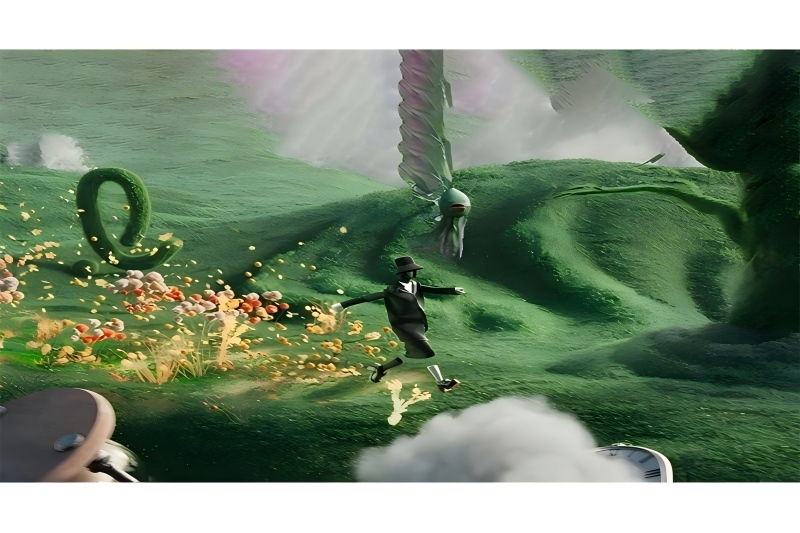
Shared assets are a major part of modern VFX workflows. A character may need to appear in close-ups, wide shots, action sequences, and different environments. An environment may be reused from several camera positions. The same effect may need to be adapted for different distances or lighting conditions.
That reuse saves production time, but it also creates dependencies. When an asset changes, someone needs to know which shots are using the affected version. Otherwise, one scene may contain the updated asset while another continues to use an older version.
Artist coordination follows a similar pattern. Modeling, texturing, rigging, animation, simulation, lighting, rendering, and compositing have different responsibilities, but the boundaries between them are not always clean. A problem discovered during compositing may lead back to lighting or asset preparation. An animation change may require another round of simulation or rendering.
A well-connected production pipeline gives artists enough visibility to understand these handoffs. It also helps production managers identify where a delay is likely to travel next.
For a broader overview of the services available from Firefish Studios, you can explore its capabilities page.
Visual consistency becomes harder to maintain as more shots and artists enter a project. Small differences may not be obvious when shots are reviewed individually, but they can become distracting when the scenes are placed next to one another.
A character may gradually change in appearance. An environment may lose details established during the original design stage. Lighting may become inconsistent, or an effect may behave differently from one scene to the next without a clear creative reason.
This is where visual effects design provides more than an initial creative direction. It establishes a visual reference that can guide the development of recurring elements across the project.
Character proportions, materials, textures, environmental structures, lighting behavior, atmospheric effects, and other details may all need to follow an established visual logic. Approved designs and reference materials give artists a common foundation when several people are contributing to the same visual world.
Consistency does not mean that every shot should look identical. A close-up naturally reveals more detail than a distant shot. A night sequence requires different lighting from a daytime scene. The goal is to make these variations feel intentional rather than accidental.
| Production Area | Common Challenge | What Needs Attention |
|---|---|---|
| Shot tracking | Priorities become difficult to see as the shot count increases | Status, dependencies, approvals, and blockers |
| Shared assets | One asset change affects multiple shots | Asset versions and affected scenes |
| Artist collaboration | Different artists interpret recurring elements differently | Approved references and clear communication |
| Creative revisions | A requested change creates unexpected downstream work | Impact on connected shots and departments |
| Final sequence | Individual shots look good but feel disconnected together | Continuity, lighting, color, movement, and effects |
Revisions are an ordinary part of visual effects production. A director may change the appearance of a creature after seeing it in context. An environment may need to be redesigned after editorial changes. A client may decide that an effect needs to be more restrained or more prominent.
The difficult part is often not making the requested change. It is understanding what else that change touches.
Consider a character that appears in several scenes. If the character's proportions or costume are changed after animation has already begun, the update may affect the model, textures, rig, animation, lighting, rendering, and compositing. Shots that seemed close to completion may suddenly require another review.
Environment changes can have similar consequences. Moving a structure in a digital set may alter camera composition, reflections, shadows, background elements, and interactions with other effects.
Before a significant revision is applied across a project, it is useful to trace its dependencies. Some shots may require a full update, while others may only need a visual check. Treating both situations in exactly the same way creates unnecessary work.
Version control is equally important. Artists need to know which design, asset, and shot version is current. Clear versioning reduces the chance of outdated material being used after a creative decision has already changed.
Good revision management is not about eliminating changes. It is about understanding their reach so that creative decisions can move forward without creating confusion throughout the wider visual effects production pipeline.
Some of the most noticeable VFX problems only appear when individual shots are watched together. A character may look convincing in isolation but appear to change scale between two consecutive shots. An effect may work well in one frame but feel excessive when it immediately follows another visually intense moment.
Lighting and color can drift in subtle ways as well. A digital environment might maintain its appearance in one scene but suddenly feel different in another because the treatment of atmosphere, reflections, or shadows has changed.
Sequence-level review gives the production team a chance to catch these issues. Instead of asking only whether a shot meets its own requirements, the review considers how it connects with the surrounding shots.
This is also where visual effects design can be tested against the finished edit. A visual treatment that looked appropriate during early development may need refinement once it interacts with camera movement, performances, pacing, and neighboring shots.
The finished sequence should feel like a continuous visual experience rather than a collection of independently completed frames. Sometimes the necessary adjustment is small—a change in timing, color, compositing, or effects intensity—but its impact can be significant when the sequence is viewed as a whole.
Managing multiple shots during a complex visual effects production is largely about understanding connections. Shots share assets, creative decisions, technical processes, artists, and deadlines. When those relationships are visible, teams can anticipate problems instead of discovering them after work has already moved downstream.
Visual effects design gives the project its visual foundation, while production planning turns that foundation into a consistent result across individual shots and complete sequences. Keeping the two connected is particularly important when a project involves recurring characters, digital environments, complex simulations, or frequent creative revisions.
The strongest workflow is not necessarily the one that pushes every shot forward at the same speed. It is the one that understands which work matters most at each stage, where dependencies exist, and how a decision made on one shot may influence the rest of the project.
If you are planning a project that requires professional visual effects support, Firefish Studios provides a direct way to discuss your creative and production requirements through its contact page.
Shot management helps teams track progress, dependencies, approvals, responsibilities, and revisions across a large number of shots.
A character, environment, prop, or effect may appear in several scenes. A change to that shared asset can affect all shots that use it.
Visual effects design establishes the visual characteristics of recurring elements, helping artists maintain a consistent appearance across different shots.
VFX elements are interconnected. A change to an asset may affect modeling, animation, lighting, rendering, simulation, or compositing depending on how it is used.
Approved references, consistent assets, version control, communication between departments, and sequence-level reviews can help maintain visual consistency.
Sequence reviews can reveal continuity problems in lighting, color, scale, movement, effects, and compositing that may not be obvious when shots are viewed separately.